Home › Pressure Washing › Deck Cleaning
How To Power Wash A Deck Without Damaging It
The short version: let the cleaner do the work and keep the pressure low. Here is how we wash decks in Kankakee County and Will County, including the peroxide based product we spend extra on to protect the wood.

The short answer
Power wash a deck safely by cleaning it chemically instead of mechanically. Apply an oxygenated peroxide cleaner, give it time to break down the mildew and the grey oxidized layer, agitate lightly with a soft brush, then rinse at 500 to 800 PSI with a wide fan tip held at least twelve inches off the boards, moving with the grain. Never use chlorine bleach on wood, and never use a narrow or zero degree tip.
Why Pressure Is What Ruins Decks
Wood is not one uniform material. Each growth ring has hard latewood and soft earlywood side by side, and pressure takes the soft part out first. That is what leaves a deck looking like corduroy after a weekend of enthusiasm with a rented machine.
The damage is easy to spot once you know what to look for. Fuzzy or furry grain that catches bare feet. Wave patterns across the boards where the wand moved too fast in some places and lingered in others. Gouges around knots and board ends. Stripped stain in patches, which forces a full sand and refinish rather than the touch up you planned on.
Here is the part people miss. That grey layer on an untreated deck is oxidized wood fiber and mildew, and it is only a fraction of a millimeter thick. It does not need force. It needs a cleaner that dissolves what is holding it there.
Why We Do Not Use Bleach On Wood
Chlorine bleach is the cheapest way to make a deck look clean quickly, which is why plenty of outfits reach for it. It also breaks down lignin, the natural binder that holds wood fibers together. The boards look bright the day of, then the surface fuzzes early, fasteners corrode faster, and the plants under the deck take the hit.
So the deck reads clean in the after photo and is measurably weaker than it was that morning. On a surface you walk on barefoot and expect to last twenty years, that trade is not worth the savings.
What We Use Instead: GreenOx Renew
We clean decks with GreenOx Renew, a peroxide based wood cleaner from GreenFlow USA. It is a bleach alternative built specifically for weathered wood, and it works by oxidation rather than by force.
- Contains 7.5 percent hydrogen peroxide and mixes with an activator on site
- Participates in the EPA Safer Choice program and biodegrades into water and oxygen
- Safe to use around vegetation and over water, which matters for decks near beds, ponds, or a creek
- Absorbs into the pores and keeps working on the wood after the rinse
- Low odor and low toxicity, so nobody has to clear the yard for the afternoon
- Covers roughly 200 to 400 square feet per gallon depending on how porous the wood is
Yes, it costs more
A peroxide cleaner with an activator costs several times what a bleach mix costs per gallon, and on a porous deck it goes down at a rate that gets your attention. We buy it anyway, and we price deck work accordingly.
The math is not complicated. Replacing a deck runs into the thousands. Sanding and refinishing one that got fuzzed by a pressure washer is not far behind. Spending an extra amount measured in tens of dollars on the right chemical is the cheapest insurance in the job. If another quote comes in noticeably lower, ask what they are putting on the wood. That is usually where the difference is.
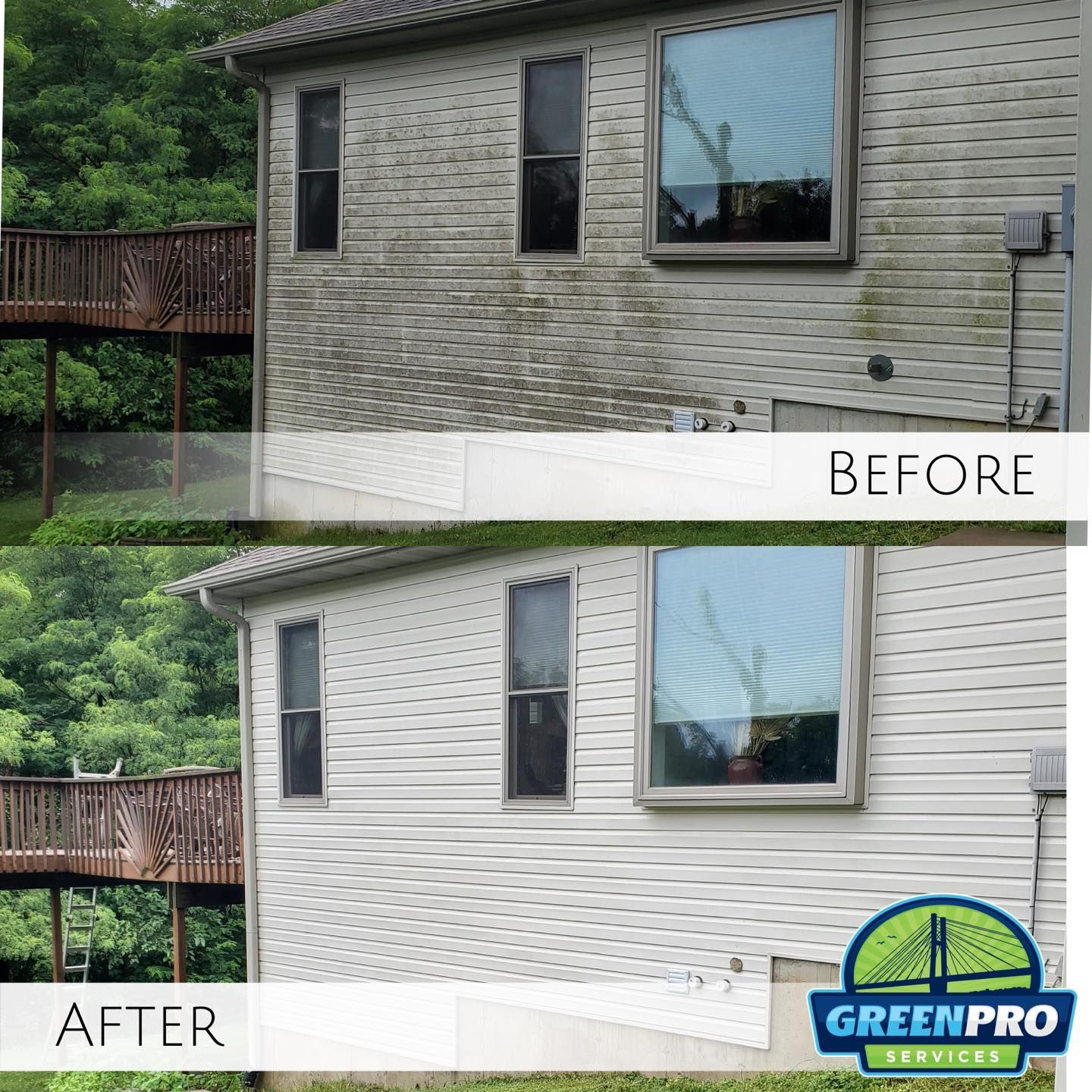
The same principle we use on siding applies to wood: the solution does the work, the water only rinses.
Our Deck Cleaning Process, Step By Step
1. Clear and inspect
Furniture, grills, and planters come off. We sweep the boards and the gaps between them, then walk the deck looking for popped fasteners, loose boards, and soft spots. Anything structural gets pointed out before we spray, because cleaning does not fix rot and we are not going to pretend otherwise.
2. Soak the landscaping
Everything growing around and under the deck gets wet down first. Even with a plant safe product, saturating beds beforehand means any runoff arrives heavily diluted.
3. Apply the activated cleaner
GreenOx Renew gets mixed with its activator on site and applied to a dry surface in sections, generally ten by ten feet, so it never dries before we rinse. You can watch it foam as the oxygen reacts with the mildew and grime. That foam is the work happening.
4. Let it dwell, then agitate lightly
Dwell time is where the cleaning happens. On heavily weathered boards we follow with a soft bristle brush along the grain, which lifts what the chemistry loosened. Not scrubbing. Just helping.
5. Rinse at low pressure
This is the only point where a pressure washer touches the deck, and it is set low. Roughly 500 to 800 PSI on soft woods like pine and cedar, up to about 1,200 on dense hardwood, always with a 25 or 40 degree tip held twelve inches or more off the surface and moved with the grain. Board ends, knots, and railings get extra distance because they take damage first.
6. Brighten if the wood needs it
Some decks want a brightener after cleaning to even out the tone and bring the color back before a stain goes down. We tell you whether yours does rather than adding it to every invoice by default.
7. Let it dry before sealing
Give the deck 48 to 72 hours of dry weather before staining or sealing. Wood holds moisture below the surface after the top feels dry, and sealing over that moisture is how finishes end up cloudy and peeling by the following summer.
Composite Decking Is A Different Animal
Composite boards do not have the fiber structure that pressure destroys, but they do have a cap layer that scars, and most manufacturer warranties put limits on pressure washing. We soft wash composite with the same peroxide cleaner and rinse gently, which clears the mold that grows down in the embossed grain without leaving marks. If your boards are under warranty, check the manufacturer's cleaning guidance before anyone points a wand at them.
If You Are Doing It Yourself
Plenty of homeowners can handle a deck themselves, and we would rather you do it right than call us after it goes sideways. The rules that matter:
- Buy an oxygenated or peroxide based wood cleaner, never chlorine bleach
- Start at the lowest pressure that works, then only raise it if you must
- Use a 25 or 40 degree tip, and throw the zero degree tip in a drawer where it belongs
- Keep the wand twelve inches or more off the boards and move with the grain, never across it
- Test an out of the way section first, like under a bench or behind a planter
- Wet your landscaping before and after
- Wear eye protection and gloves, since peroxide cleaners irritate skin and eyes
- Wait two to three dry days before sealing
When To Call Somebody
Call a professional when the deck is second story, when the stain is failing unevenly and needs stripping rather than cleaning, when boards are already fuzzed from a previous washing, or when you would rather spend the Saturday somewhere other than on your knees with a brush.
We clean decks, fences, and pergolas across Kankakee County and Will County as part of our pressure washing service, and we use the same peroxide based approach on every one of them. Request a free quote and we will get a written price back to you the same day, usually without needing to visit the property.
Common Questions
Deck Cleaning FAQ
Stay between 500 and 800 PSI on soft woods like pine and cedar, and no higher than about 1,200 PSI on dense hardwoods. Use a 25 or 40 degree fan tip, keep the wand at least twelve inches off the boards, and move with the grain. Anything narrower or closer than that carves into the wood. On our jobs the rinse is the only place pressure enters the picture at all, because the cleaner has already done the work.
Yes, if the cleaning is chemical rather than mechanical. Apply an oxygenated peroxide cleaner, let it dwell and break down the mold, mildew and grey oxidized layer, agitate lightly with a soft brush, then rinse at low pressure. Damage happens when people skip the cleaner and try to blast the grey off, which strips the soft wood between the grain lines and leaves a furry, splintered surface.
We use GreenOx Renew, a peroxide based wood cleaner from GreenFlow USA. It contains 7.5 percent hydrogen peroxide, mixes with an activator, and participates in the EPA Safer Choice program. It biodegrades into water and oxygen, is safe to use around vegetation and over water, and it keeps working in the pores of the wood after the rinse. It costs more per gallon than a bleach mix, and we use it anyway.
Chlorine bleach breaks down lignin, the natural binder that holds wood fibers together. It can leave the boards looking clean at first while quietly weakening the surface, fuzzing the grain over time, corroding fasteners, and killing the plants under the deck. It is cheap, which is exactly why it is common. It is not the right product for wood.
Most residential decks in Kankakee County and Will County fall between $200 and $500 depending on square footage, railing count, and how much organic growth has taken hold. Multi level decks and heavy restoration jobs run higher. Bundling the deck with a driveway or house wash on the same visit lowers the total, and every quote is written before we start.
Give it 48 to 72 hours of dry weather. Wood holds moisture well below the surface even when the top feels dry, and sealing a damp deck traps that moisture under the finish, which leads to peeling and cloudiness. If rain is in the forecast, push the staining rather than rushing it.
Carefully. Composite boards do not have the same fiber structure as wood, but high pressure still scars the cap layer, and most manufacturer warranties limit what pressure is allowed. We soft wash composite with the same peroxide cleaner and rinse at low pressure, which handles the mold that grows in the embossed grain without marking the surface.
Once a year for most decks in this climate, usually in late spring. Decks in shade or under trees grow mildew faster and can need it more often. Staying on a yearly cycle keeps you in cleaning territory instead of restoration territory, which is a much cheaper place to be.
Let Us Clean Your Deck The Right Way
Peroxide based cleaner, low pressure rinse, landscaping protected, and a written price before we start. Serving Kankakee County and Will County, Illinois.